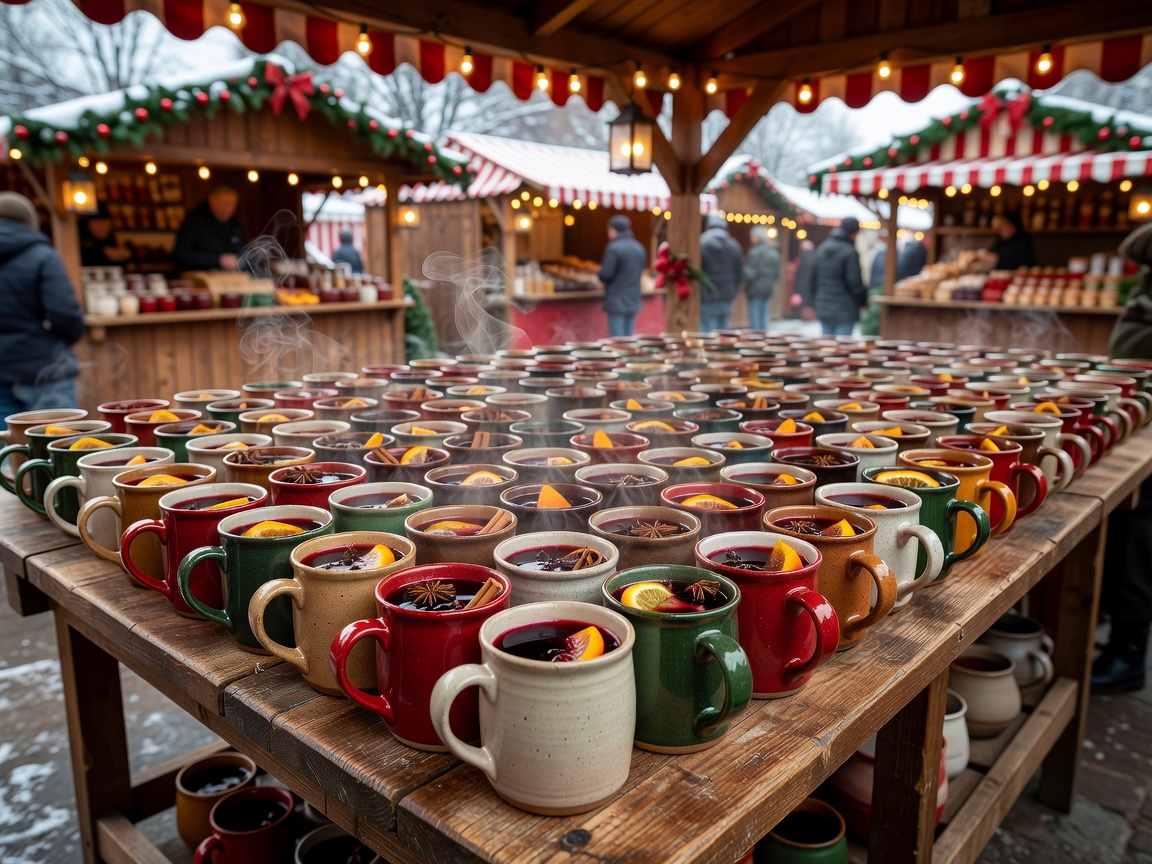
The drinks that define the season
Glühwein (Germany, Austria) and vin chaud (France) are the classic mulled wines — red wine warmed with cinnamon, star anise, cloves and citrus. Glögg (Scandinavia) is similar but often spiked with vodka or aquavit and studded with raisins and almonds. Most stalls charge €3–€6 for the drink itself, plus a €2–€3 Pfand (deposit) on the ceramic mug, refunded when you return it — or keep the mug as a souvenir and skip the refund. If you don't drink alcohol, ask for Kinderpunsch or "alkoholfrei" glühwein, available at almost every German and Austrian stall.
| Region | Signature item | Typical price |
|---|---|---|
| Germany / Austria | Glühwein, Bratwurst, Lebkuchen | €3–€7 |
| France (Alsace) | Vin chaud, flammekueche, bredele biscuits | €4–€9 |
| Scandinavia | Glögg, pepparkakor, saffron buns | €4–€8 |
| Hungary | Kürtőskalács (chimney cake), langos | €3–€6 |
| Czech Republic | Trdelník, sausages, hot honey wine | €3–€6 |
Food worth queueing for
Kürtőskalács — the Hungarian chimney cake rolled in sugar and cinnamon, sometimes filled with nutella or ice cream — draws real queues in Budapest and Prague, and it's worth the wait. Langos, a deep-fried flatbread topped with sour cream, cheese and garlic, is heavier but deeply satisfying after an hour in the cold. In Alsace, flammekueche (a thin, cream-and-onion flatbread) makes an excellent shared starter before moving on to sweeter stalls.
Eating at the market: pros
- Cheaper than sit-down restaurants for a light meal
- Wide variety within a small area
- Part of the atmosphere, not just the meal
Eating at the market: cons
- Limited seating; often standing while eating
- Portions can be small for the price at famous squares
- Popular stalls have long queues at peak times (weekends, evenings)
Vegetarian and vegan options
Markets have improved considerably here. Roasted chestnuts, potato pancakes (Reibekuchen), fried mushrooms, and many bread and pastry stalls are naturally vegetarian. Vegan glühwein is common (check the label — some use honey), and cities like Berlin and Vienna now have dedicated vegan food stalls at major markets. It's worth searching the specific market's official site in advance, since vendor lists are often published by October.
Tip: Bring a small reusable bag for pastries and a few coins in local currency — some smaller stalls, especially in Germany and Austria, are cash-only or charge a card surcharge under a certain amount.
Building a food-first day
Split your visit into two sessions rather than one long slog: an early afternoon pass for savoury food while stalls are quiet, then an evening pass focused on drinks and sweets once the lights are on and queues for food have died down. This avoids the worst crowding around 5–7pm, when everyone else arrives at once.
Pairing food with your destination
If food is your main reason for travelling, Strasbourg and Colmar (see our Christmas markets guide) offer the widest variety of genuinely regional Alsatian dishes, not just the standard glühwein-and-sausage combination found everywhere else.