Why the "big five" get all the attention
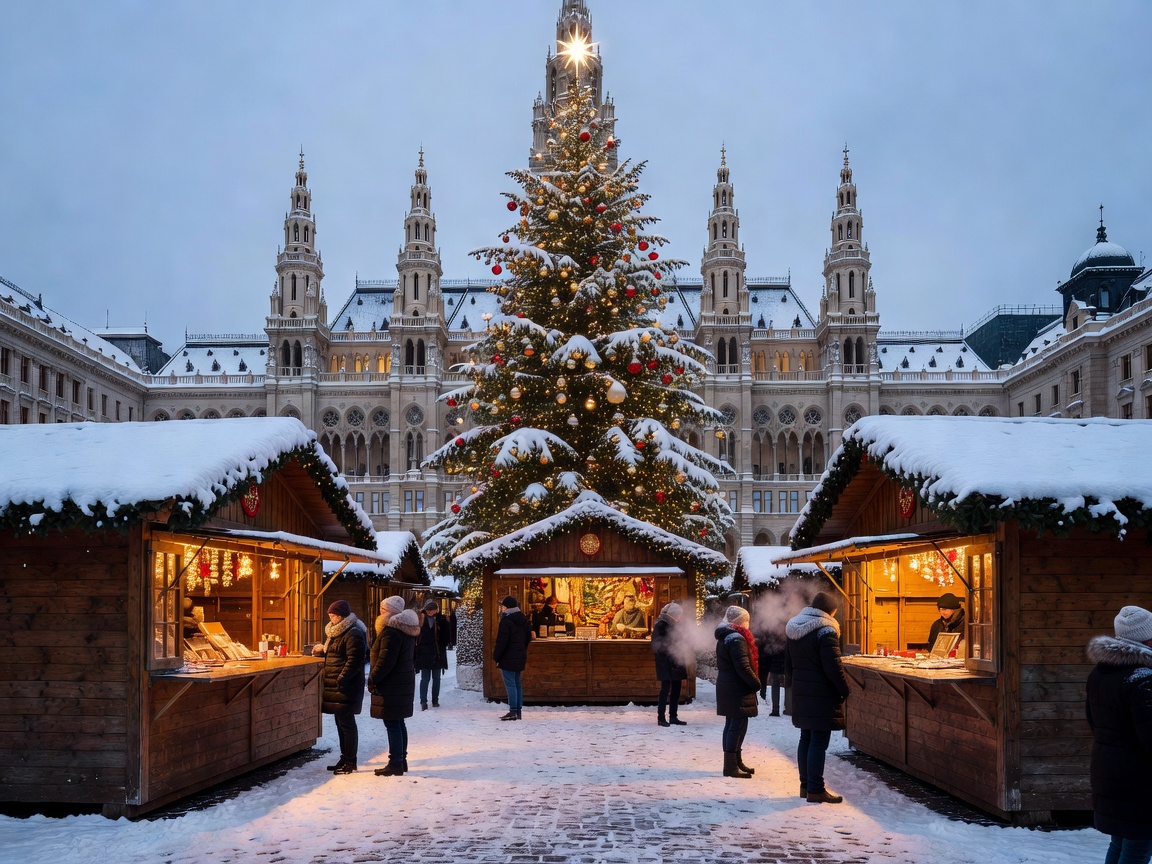
Vienna, Strasbourg, Nuremberg, Prague and Tallinn dominate every list because they combine long histories, dense stall counts and easy transport links. But "famous" doesn't always mean "best for you." Vienna's Rathausplatz market is genuinely beautiful, but it draws crowds thick enough that browsing stalls after 4pm on a Saturday feels more like a queue than a stroll. Strasbourg, by contrast, spreads its market across multiple squares, which thins the crowd and gives you room to actually enjoy the smell of vin chaud.
| Market | Opens | Entry | Crowd level | Best for |
|---|---|---|---|---|
| Vienna (Rathausplatz) | Nov 15 | Free | Very high | First-timers, tree-lighting atmosphere |
| Strasbourg | Nov 28 | Free | High, spread out | Wandering, multiple squares |
| Nuremberg (Christkindlesmarkt) | Nov 28 | Free | High | Traditional stalls, prunes men figures |
| Prague (Old Town Square) | Nov 30 | Free | Very high | Photos, architecture backdrop |
| Tallinn (Town Hall Square) | Nov 21 | Free | Moderate | Budget trips, smaller crowds |
The case for smaller, lesser-known markets
Some of the best afternoons we've had weren't in the famous squares at all. Colmar, a short train ride from Strasbourg, runs five separate markets across its half-timbered old town, and because it's smaller, you can actually hear the carollers. Rothenburg ob der Tauber in Bavaria feels like stepping into a snow globe — no big crowds, and its Reiterlesmarkt has run since the 1400s. If your priority is atmosphere over scale, build a day trip to a smaller town around a stay in a bigger city.
Big-name markets: pros
- Easy to reach — direct flights and trains
- Long opening hours, into late evening
- More stalls, more variety of food and gifts
Big-name markets: cons
- Crowds peak on weekends and after 4pm
- Popular hotels sell out by early November
- Higher food and mulled wine prices near the main square
What things actually cost
Market entry is free almost everywhere in Europe, but budget for the extras: a mug of glühwein or vin chaud typically runs €3–€8, including a small deposit (Pfand) on the mug that's refunded if you return it. A bratwurst or langos runs €4–€7. Small handmade gifts — wooden ornaments, candles, honey — range from €5 to €40. A realistic daily snacking-and-drinking budget per person is €20–€35, more in Vienna and Prague, less in Tallinn or smaller German towns.
Booking tip: Most major markets publish their opening dates by early September. Once dates are confirmed, hotel prices near the main square typically rise within two to three weeks — book your accommodation before the market's own website confirms its dates if you can find last year's pattern.
Matching the market to your trip style
If you're travelling with young children, Nuremberg and Rothenburg both run dedicated children's markets (Kinderweihnacht) with gentler crowds and carousel rides. If you're after a food-first weekend, Strasbourg and Colmar's Alsatian stalls — flammekueche, bredele biscuits, spiced wine — are hard to beat. Couples wanting a quieter, more romantic setting tend to prefer Tallinn's medieval square or Salzburg's Domplatz market beneath the fortress. Groups after a lively night out gravitate toward Vienna's Spittelberg market, known for its bars and later closing time.
Our shortlist for 2026
If you can only choose one: Strasbourg for atmosphere and food, Tallinn for value and smaller crowds, Vienna if it's your first Christmas market trip and you want the postcard version. Whichever you pick, check our booking timeline so you're securing flights and rooms in September or October rather than competing for scraps in late November.